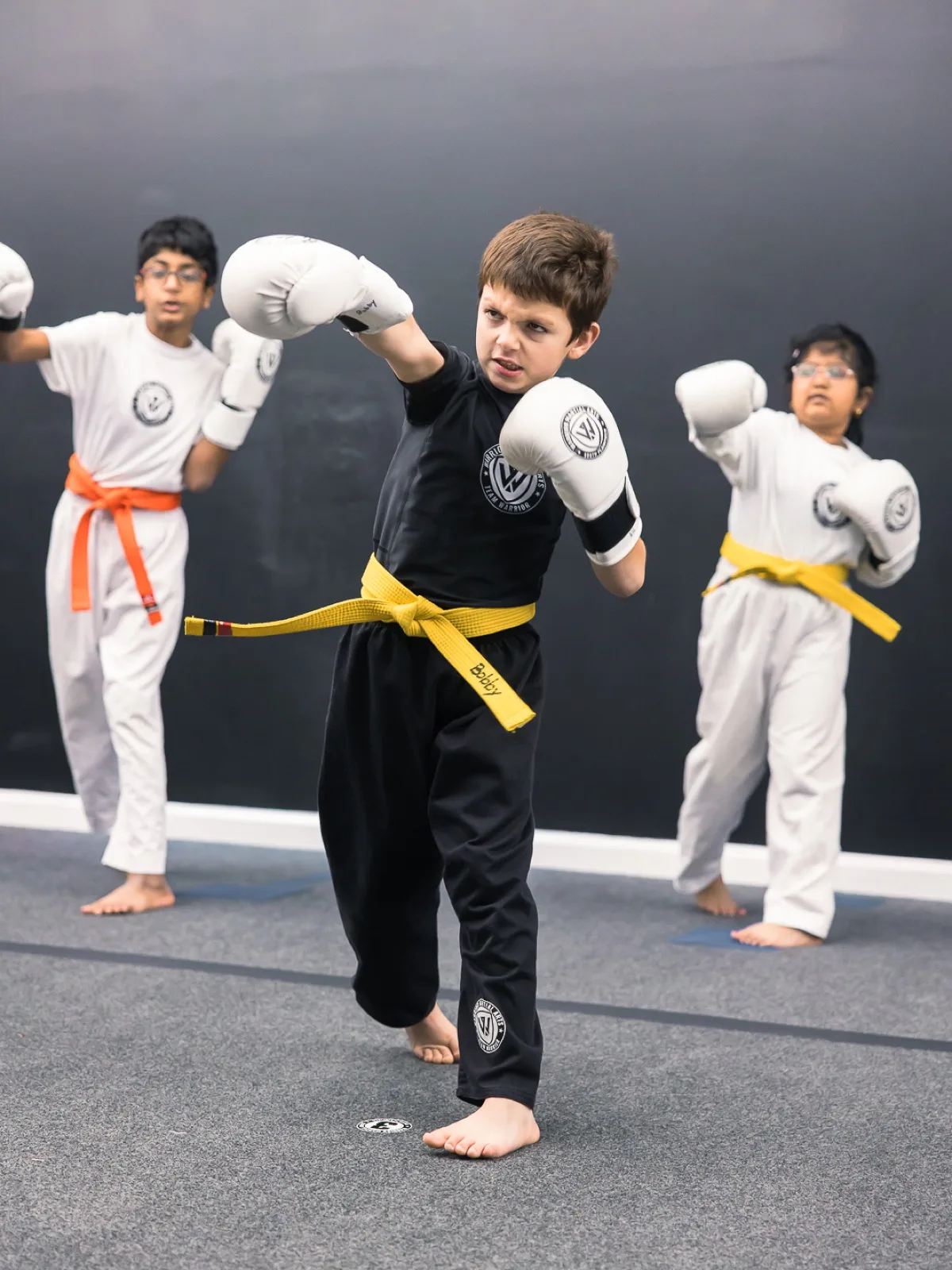
Kids Martial Arts · Child Development
7 Real Benefits of Martial Arts for Kids
Warrior Martial Arts NJ· 8 min read· Updated June 7, 2026
Martial arts builds confidence, focus, discipline, real fitness, and resilience in kids — usually all at once. Kids learn to set goals and finish them, stand tall, and get back up after falling short. A 2022 systematic review found martial arts improved fitness in both preschool and school-age kids.
Every parent wants the same thing: a kid who grows up confident, focused, and resilient. In a world of screens and constant comparison, those qualities don’t just happen — they’re built through steady, structured practice. That’s what martial arts is. In fourteen years across our Dunellen, South Plainfield, and Somerset studios, we’ve watched the same handful of changes show up again and again. Here are the seven that matter most.
A belt isn’t a participation sticker. When a kid lands a clean front kick, earns a stripe, or holds their nerve through their first board break, something clicks: I can do hard things. That shift is the root of real confidence, and it travels — into the classroom, onto the playground, into the first moment a bigger kid tests them. Our belt path is built to deliver those wins on a steady drip, brick by brick, so a shy kid stacks small victories until standing tall just feels normal.
Martial arts demands present-moment attention — a wandering mind means a missed block. Coaches use call-and-response drills and timed challenges that ask kids to lock in on demand, then reward it instantly. Parents tell us the change shows up off the mat first: finishing homework, listening through a full instruction, settling faster at night. For high-energy kids especially, that fast loop of try, adjust, succeed is far easier to ride than a sport with long stretches of standing and waiting.
Every class opens and closes with a bow — a small, repeated cue that we’re here to learn and to respect each other. It’s not ceremony for its own sake; it’s the daily practice of a mindset. Kids learn that discipline isn’t punishment, it’s the structure that makes achievement possible. They learn to listen before speaking, try before complaining, and get back up after falling down. Those reps don’t stay on the mat.
We hope your kid never needs it. But the ability to set a boundary, read a situation, and stand their ground is a real life skill. Our curriculum teaches age-appropriate techniques alongside the thing that matters more: the awareness and calm assertiveness to avoid trouble in the first place. Kids who train tend to get targeted less — not because they fight, but because they carry themselves differently. Confidence is the best deterrent there is.
A typical class is a full-body workout — strength, flexibility, coordination, cardio — that kids don’t experience as "exercise." They experience it as the best part of their week. And unlike seasonal sports, martial arts runs year-round, so kids build a consistent habit instead of a three-month burst. The research backs this up: a 2022 systematic review found martial arts improved physical fitness in both preschool and school-age children.
The belt system is one of the best teaching tools in any kids’ activity. Each belt is a clear target that takes weeks or months of real work. A kid learns to set a goal, break it into steps, push through frustration, and finish — the exact pattern behind success in school, work, and life. When a kid earns a belt here, they’re not collecting fabric. They’re internalizing a process that outlasts every class they take.
Kids thrive when they’re part of something bigger than themselves. Students cheer each other through belt tests, talk a nervous classmate through a hard drill, and build friendships that outlast the season. Our head coaches know every kid by name and care how their week went, not just how their kick looks. When a kid walks through our doors, they join the Warrior family — and that belonging is its own kind of confidence.
For most kids, yes. It’s one of the few activities that builds fitness, focus, emotional resilience, and social skills all at the same time. It works for the shy kid who needs confidence, the high-energy kid who needs structure, and every kid in between. We have age-specific programs from 18 months through age 11 — and every new kid starts with a free, one-on-one first class. The best way to see the benefits is to watch them happen.
Source: 2022 systematic review of martial arts and youth fitness (PMC). Last updated June 7, 2026.
The big ones are confidence, focus, discipline, real fitness, and resilience. Kids learn to set goals and finish them, to stand tall and make eye contact, and to get back up after falling short. A 2022 systematic review found martial arts improved fitness in both preschool and school-age kids.
As young as 18 months. Our Mighty Warriors class (18 months–2) is parent-on-the-mat and play-based, and kids grow through Mini (3–4), Rising (5–6), Warriors (7–9), and Leaders (10–11). Most schools start at 4 or 5 — we built a real path for the littlest ones too.
Often it’s the best fit. There’s no team to hide behind and no bench — just steady, individual progress at the kid’s own pace. We spotlight kids doing it right and never call out the ones who don’t, so a shy kid stacks small wins until standing tall feels normal.
Yes — it’s the change parents notice first. The same attention kids train in class (eyes up, listen, finish what you start) shows up in homework, chores, and how they handle frustration. Research links structured martial arts to better self-regulation and attention in kids.
Very. Classes are small, age-specific, and run by background-checked head coaches — "contact" for young kids means controlled drilling on pads, never on each other. Supervised kids martial arts has a lower injury rate than most popular team sports.
The fastest way is to watch one class. Every new kid starts with a free, one-on-one first class with a head coach — a real technique, a first board break, and a game plan built around your child. You’ll know within forty-five minutes whether it clicks.
A private, one-on-one first class with a head coach in Dunellen, South Plainfield, or Somerset. Forty-five minutes to know if it’s the right fit.