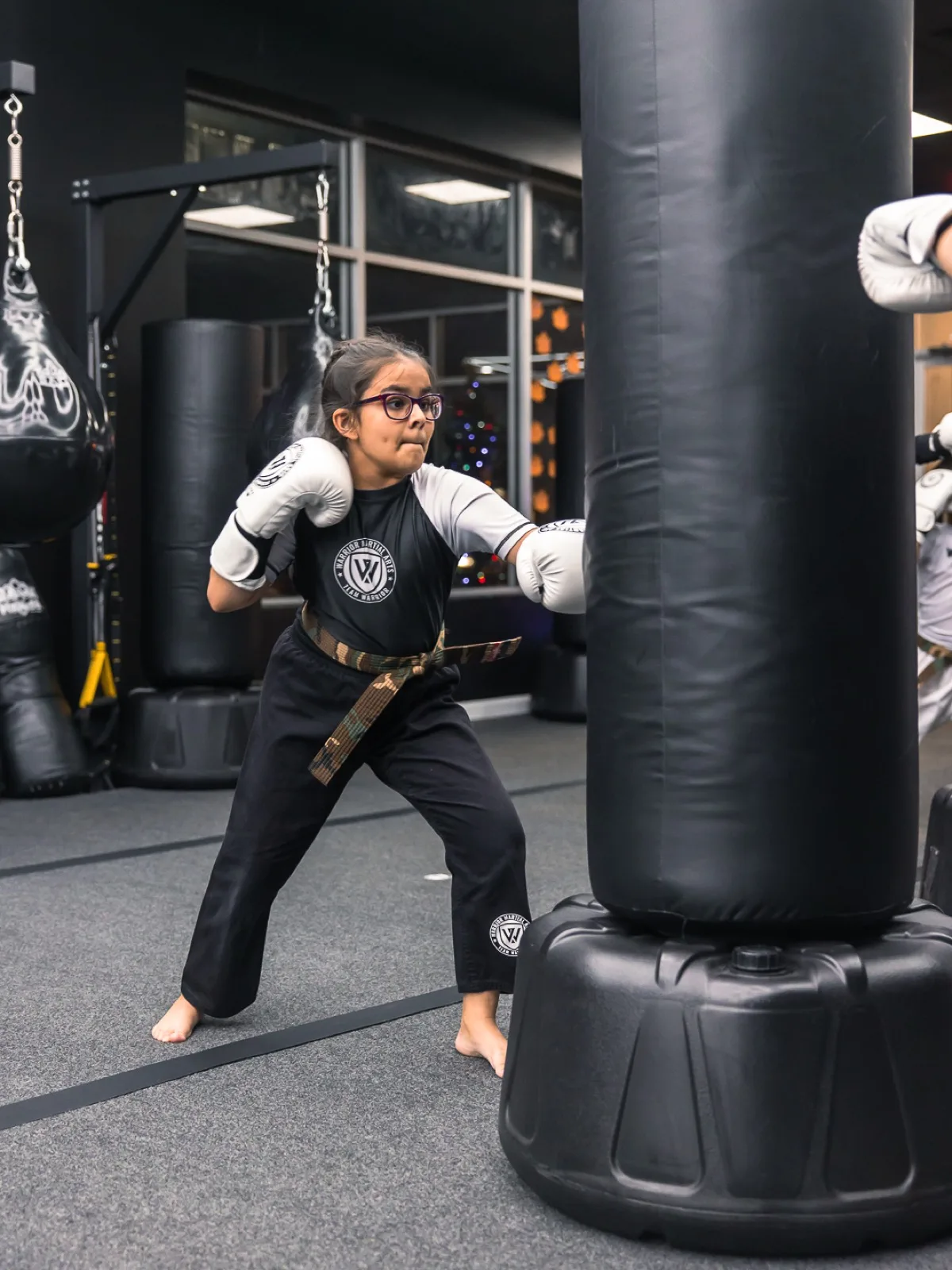
Kids Martial Arts · Focus & ADHD
Is Martial Arts Good for Kids with ADHD?
Warrior Martial Arts NJ· 7 min read· Updated June 7, 2026
Yes — for many kids, martial arts genuinely helps with ADHD. It pairs short bursts of movement with clear structure and instant feedback, the exact conditions where focus and self-control grow. A 2022 University of Surrey study found 11 weeks of taekwondo improved kids’ attention and self-regulation and reduced aggression.
If you have a high-energy kid, you already know the pattern: the activity that was supposed to "tire them out" ends with them more wound up than when they started. Long stretches of standing in the outfield. Waiting for a turn that never quite comes. So when a parent asks us whether martial arts is good for a kid with ADHD, the honest answer is: more often than not, yes — and the reasons are baked right into how a class is built.
This isn’t just a coach’s hunch. In 2022, researchers at the University of Surrey ran a randomized controlled trial — the gold standard for this kind of question — with 240 primary school children ages 7 to 11. After 11 weeks of taekwondo, the kids who trained showed measurable improvements in self-regulation and attention, and a reduction in aggression, compared with a control group. In plain terms: the same skills many kids with ADHD are working hardest on are exactly the ones structured martial arts builds.
That tracks with what we see on the mat every week. We don’t diagnose or treat anything — but we do run a class that quietly trains the muscles of attention and self-control, one short round at a time.
A Warrior class is built in short rounds, not one long block. There’s always a next thing — a new drill, a new target, a new small goal — so a kid’s energy has somewhere to go before it boils over. Every round comes with immediate, specific feedback: a cleaner front kick, a sharper block, eyes up. For a kid who struggles to stay locked in, that fast loop of try, adjust, succeed is far easier to ride than a sport with long stretches of waiting.
And the goals are personal. The next stripe, the next belt — those are milestones the kid owns, not a team outcome they share. That ownership is a powerful motivator for a child who’s used to hearing about everything they’re doing wrong.
Our coaches use call-and-response drills, count-down challenges, and tight "freeze" moments that ask a kid to lock in their attention on demand — then reward it the second they do. We spotlight the kids doing it right and never call out the ones who don’t, because confidence is built on wins, not corrections. Parents tell us the change shows up off the mat first: finishing homework, listening through a full instruction, settling faster at bedtime.
It’s the worry we hear most, and the answer is almost always no. Our head coaches have spent years working with high-energy kids — the wiggly, the loud, the ones who’ve been asked to leave other activities. The room is designed for exactly that kid. Most settle into the rhythm within a few weeks, and the ones who take longer get a coach who meets them where they are instead of sending them to the bench.
The best way to find out isn’t to read about it — it’s to watch it. Every new kid starts with a free, one-on-one first class with a head coach: a real technique, a first board break, and a relaxed game plan built around your child. You’ll see the focus work in real time, and you’ll know within forty-five minutes whether this is the structure your kid has been missing.
Source: Ng-Knight et al., University of Surrey (2022) — “Taekwondo improves primary school children’s self-regulation, finds study.” Last updated June 7, 2026.
Yes, for many kids it helps a lot. Martial arts pairs short bursts of movement with clear structure and instant feedback — exactly the conditions where attention and self-regulation grow. A 2022 University of Surrey study found 11 weeks of taekwondo improved kids’ attention and self-control and reduced aggression.
A 2022 randomized controlled trial from the University of Surrey followed 240 kids ages 7–11. The taekwondo group showed improved self-regulation and attention and reduced aggression versus the control group — strong evidence that structured martial arts builds the exact skills many kids with ADHD are working on.
Almost never. Our coaches are used to high-energy kids and the whole class is built in short rounds, so there is always a next thing to channel that energy into. We spotlight the kids doing it right and never call out the ones who don’t — most "disruptive" kids settle in within a few weeks.
Team sports often mean long stretches of standing and waiting. A Warrior class is the opposite: short rounds, constant movement, immediate coaching feedback, and a personal goal — the next stripe — that the whole kid can own. That structure is why so many high-energy kids who quit other activities stick with martial arts.
No. We don’t treat or diagnose anything, and we never single a kid out. We simply run a structured class that happens to build focus and self-control — which is great for every kid, diagnosis or not. If your child has specific needs, tell us at the first class and we’ll coach accordingly.
As young as 18 months in our parent-on-mat Mighty Warriors class, though most kids working on focus start in Rising (5–6) or Warriors (7–9). There’s an age-specific class for exactly where your kid is — book a free class and we’ll point you to the right one.
A private, one-on-one first class with a head coach in Dunellen, South Plainfield, or Somerset. Forty-five minutes to know if it’s the right fit.